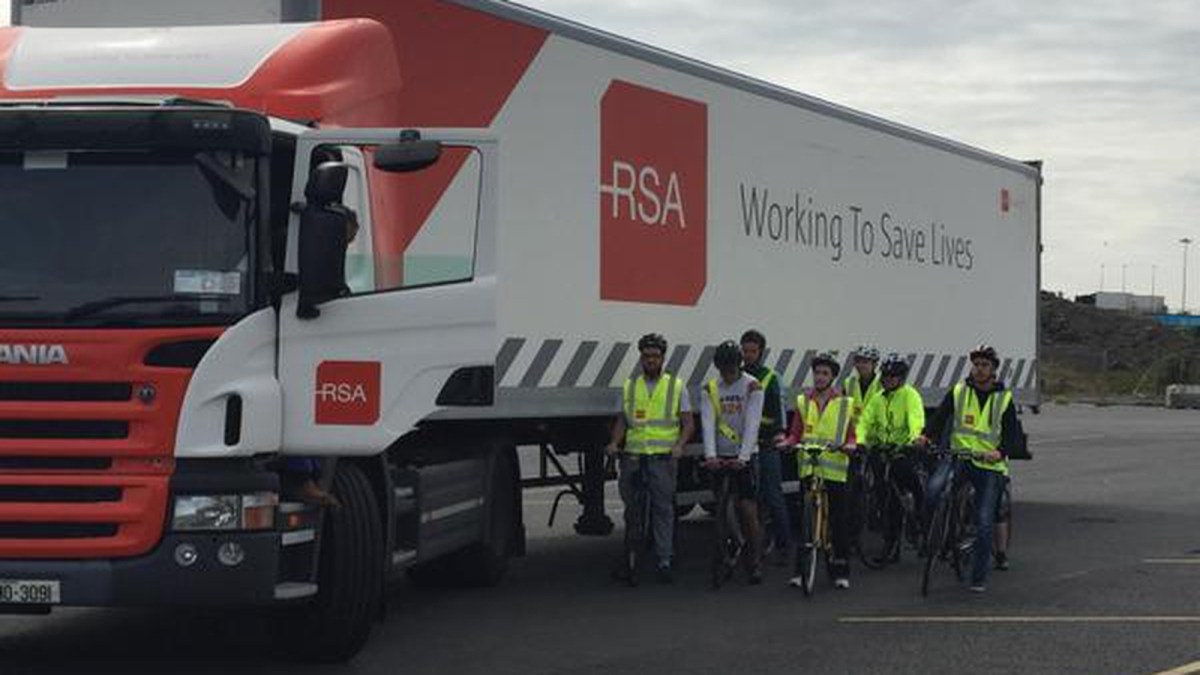
The Department of Transport is consulting on a change to the GB Highway Code. The changes proposed seek to establish a ‘hierarchy of road users’. In essence, the largest vehicles will bear most responsibility for road users smaller than them. HGV drivers will owe the greatest duty of care to all road users while pedestrians will owe no duty.
This concept is not surprising, particularly in GB where Traffic Commissioners can suspend the vocational licence of a HGV/PSV driver for serious conduct breaches. In practice, ‘professional’ drivers will always be held to a higher standard by police, DVSA and, in the worst cases, juries.
Amendments to the Highway Code are rarely controversial. However, the proposals from the DfT risk striking a balance of road safety too far in one direction. The concept of the hierarchy is reasonable, how the Highway Code seeks to operationalise it is not.
The mischief these proposals seek to cure is HGV turning-left cases when a cyclist is kerbside. These proposals are an incredibly inefficient way of doing this. They attempt to fix the problem by adding onto the existing duty of care of motorists. The HGV driver duty of care is already at saturation point; but when you have a regulation hammer, everything with airbrakes looks like a nail.
This is a 67-page proposal, so below is merely a summary of the salient points and my responses to DfT. I refer to HGVs throughout – but the proposals make no such distinction, they apply to all motor vehicles. This will not effect the Code in Northern Ireland – only GB. However, if passed, it is likely that Northern Ireland will follow.
New Proposed Rules
Drivers should not make cyclists stop or swerve when turning into a junction in the same way as you would not turn across the path of another motor vehicle.
The comparison between cyclists and motor vehicles here is at best strained, and at worst, illogical. If a HGV is turning left, it is inevitable that the traffic behind will stop until the manoeuvre is complete. This is because cars do not ordinarily overtake down the nearside when a vehicle is turning left.
This rule would make sense if it applied to cases where the vehicle has overtaken the cyclist and then almost immediately turns left, cutting the cyclist off. However, such a rule is mentioned separately in the document and so does not apply to such situations. It would also make sense if cyclists were not permitted to pass a vehicle on its nearside.
As such, the HGV will be expected to sit at the junction with its left indicator on whilst cyclists continued on. The HGV will only be permitted to start the manoeuvre when doing so will not cause a cyclist to stop.
We must also question at what distance does the approaching cyclist have to be before the turn can be executed in compliance with this rule, bearing in mind that HGVs may block an entire road for some time in order to complete the manoeuvre.
Whilst cycling on busy roads with vehicles moving faster than you…keeping at least 0.5m away from the kerb edge.
This rule may offer a solution to the problem of turning left HGV -v- cyclist collisions in city centres. If the cyclist should stay 0.5 metres from the kerb, the cyclist will be encouraged to only overtake on the righthand side or keep with the flow of the traffic in the middle of the lane.
At junctions with no separate cyclist facilities, it is recommended that you proceed as if you were driving a motor vehicle. Position yourself in the centre of your chosen lane…
This is a sensible distinction to make. Where there is a cycle lane, it is only fair that vehicles stop to let cyclists in that lane continue straight. It takes little cognitive bandwidth to check that a cycle lane is empty. It is another thing to constantly check mirrors in case a cyclist has been slipstreaming you for the past mile and appears out of nowhere. It is no secret that in busy city centres, cyclists tend to weave in and out of slow or stationary traffic (as is their right to do), but this makes them very difficult to spot.
That being said, there is a strong argument that even with cycle lanes, cyclists still ought to stay back from vehicles who appear to intend to turn left.
If you are going straight ahead at a junction, you have priority over traffic waiting to turn into or out of the side road… Be particularly careful alongside lorries as their drivers may find it difficult to see you.
This is dangerously worded. A junction with motor traffic and cyclists is precarious at the best of times. Explicitly giving cyclists priority for going straight when vehicles are turning risks intransigence from some. These situations require common sense and mild-mannered prudence; not a blank cheque for one group of road users to bomb on regardless of the clear intentions of others.
Asking cyclists to be careful around large vehicles is inadequate. HGV drivers have six mirrors, a windscreen and possibly a digital screen showing external cameras to monitor. It is eminently easier for the cyclist to spot danger than the HGV driver. Drivers of such vehicles are already saturated with monitoring duties; the cyclist has virtually none. It may be legally valid to force drivers to give way to cyclists, but it is unlikely to make much difference to the amount of deaths at junctions.
Cyclists may pass slower moving or stationary traffic on their right or left, including at the approach to junctions, but are advised to exercise caution when doing so.
Again, advising cyclists to exercise caution is valid, but the Code must go further. It must state that they should give way to motor vehicles which appear to intend to turn. However, rule 72 will remain which states ‘do not ride on the inside of vehicles signalling or slowing down to turn left’ – this must be emphasised in the new Code.
Implication of these proposals
None of the above are predicated on ‘must’ or ‘must not’; all of them are ‘should’ or ‘should not’ which means they are advisory and not an offence. However, under section 38(7) of the Road Traffic Act 1988, a breach of any rule in the Code can be used as evidence ‘tending to establish or negative any liability which is in question in those proceedings’. There is a real risk, if the above proposals are authorised by the Secretary of State, that there will be a de facto presumption of liability against drivers in turning left HGV -v- cyclist collisions.
The new Code may well make it easier for the police to charge and for the courts to convict drivers in these turning left cases, but it is unlikely to actually reduce the amount of them.
These proposals are a missed opportunity by DfT to implement an effective solution to save the lives of many cyclists.
 Transport Law NI