Outline
This case considered the categorisation of culpability in cases of causing death by dangerous driving. Disqualification periods when an offender receives an immediate custodial sentence is also briefly addressed.
Facts
In R -v- Meczynski [2005] EWCA Crim 246, the Court of Appeal considered an application by the Solicitor General to refer a sentence for being unduly lenient.
Mr Meczynski, on 20th October 2022, had been driving an R450 artic through Kidlington. He approached a set of traffic lights at a speed of 29mph. As the lights turned from green to amber and then to red, Mrs Grace crossed ahead of the oncoming lorry driven by Mr Meczynski.
The lights had changed from green to amber 11 seconds before braking had commenced. The light had been on red for eight seconds before braking commenced. Mrs Grace had been crossing the road for five seconds before braking began. Mr Meczynski did not apply the brakes until one second before impact. Mrs Grace died at the scene.
Mr Meczynski pleaded guilty at the PTPH.
He was sentenced, after 25% credit, to 45 months’ immediate custody. The sentencing judge considered his culpability to be high category C. As with causing death by careless driving, harm is not separately measured.
Leave application
The basis of the application for leave to refer the sentence for being unduly lenient was that the sentencing judge had made an error in sentencing according to culpability C and ought to have sentenced the offender under culpability B.
Decision of the Court of Appeal
Leave was refused. Sentencing Mr Meczynski within culpability B would have made little difference to his being sentenced -as he was- within culpability C. It would have been low B which, considering the ranges, would have been within the Venn diagram of high C. In any event, a starting point of five years was not unduly lenient.
There was a slight miscalculation by the sentencing judge in the extension of the disqualification for time spent in custody which was short by half a month. To this extent only, the Court of Appeal granted leave to refer the disqualification and imposed the extra half a month disqualification to the five-year disqualification imposed by the court.
Discussion
The categorisation of culpability for dangerous driving causing death is profoundly important in the sentencing exercise.[1] The starting points are:
- A – 12 years
- B – 6 years
- C – 3 years.
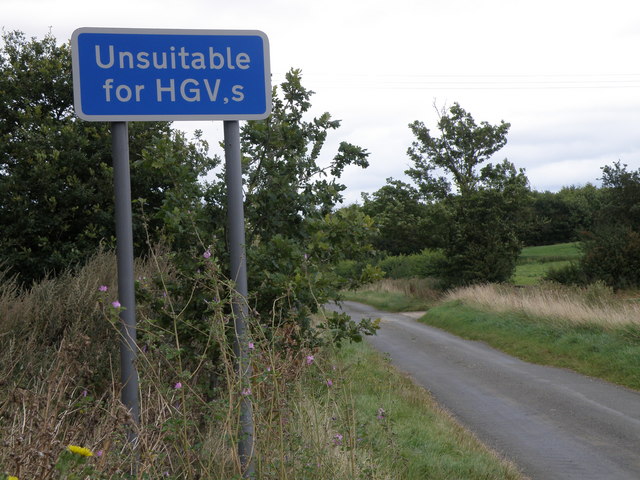
In this case the sentencing judge decided that the dangerous failure to stop at a red light was not culpability B but was culpability C. Factors of the type of vehicle driven (a HGV) and the fact that it happened in a residential area were such that he was to be sentenced according to high culpability C (the high range running to five years). After a 25% reduction for credit, the final sentence was 45 months which is not suspendable.
Cases involving a HGV automatically attract two aggravating features: driving a goods vehicle and driving for a commercial purpose (unless the driver is driving the vehicle for a truck show or other non-commercial reasons). The hierarchy of road users in the Highway Code will also act to place the culpability of a HGV-driving defendant at a slightly higher level.
This case is again one of many where the Court of Appeal is left to correct a mistake in determining the length of disqualification under section 35A of the Road Traffic Offenders Act 1988. This appears to be more common than not. Advocates should be careful to bring section 35A to a sentencing court’s attention and that the extension is mandatory and not discretionary.
[1] https://www.sentencingcouncil.org.uk/offences/crown-court/item/causing-death-by-dangerous-driving/
 Transport Law NI