
Sars-Cov-2 Relaxation of GB tachograph enforcement

Article 14(2) of Regulation 561/2006


Temporary relaxation of the enforcement of the drivers’ hours rules: delivery of essential items to retailers


A number of people have informally asked me about this possibility over the past few days and, as expected, the UK government has granted a temporary exception to the enforcement of Articles 6-9. This, as mandated by paragraph 2, can only last for 30 days without formal approval from the Commission under paragraph 1.

This is to be viewed as a forbearance promised by the Department for Transport in relation to the enforcement of tachograph rules up to the limits specified below. Any rules not addressed are not relaxed and remain fully enforceable.


The Sars-Cov-2 exception in the UK

Identical exceptions have been issued by the Department for Transport in GB and by the Department of Infrastructure for NI.


  1. Who does the exception apply to?

Drivers involved in the delivery of:

  • Food
  • Personal care
  • Household paper
  • Cleaning products
  • Over-the-counter pharmaceuticals


  1. Type of movement of the above goods

The exception only applies when the above goods are moved:

  • From distribution centres to stores
  • From manufacturer/supplier to store and RDC (this includes bringing empties back)
  • Between distribution centres and trunking hub
  • Transport depot to stores.

Therefore, it does not include the delivery of goods to end-user consumers.


  1. Duration of exception

This will cover shifts between 0001 today (Wednesday 18th) and 2359 April 16th. After this, formal approval must be granted by the Commission.


  1. The substance of the exception

The exception is not carte blanche to ‘keep ‘er lit’ – please note the following:

  1. Daily drive limit to 11 hours (instead of 9s and 10s);
  2. Minimum daily rest down to 9 hours (instead of being limited to 3 9s per week);
  3. 96 hours of driving over the fortnight;
  4. Instead of taking weekly rest after six 24-hour periods, you can start it a full week after your first shift (so 7 shifts instead of 6);
    1. However, one regular and one reduced will still be required in a fortnight.
  5. 5 hours driving allowed before taking a 45.


The government will not allow a driver to avail of 11 hours driving if they intend to do 7 shifts.


Drivers must take a printout at the end of every shift citing the reason for the non-compliance (simply write ‘covid-19 exception rules’), date and sign.


Observations

This is not a particularly far-reaching exception but may be of significant assistance to larger companies who are best placed to utilise every minute of driver time in their networks.


As mentioned above, this ‘relaxation’ of tachograph enforcement does not mean the rules are entirely suspended. Many drivers who I have been speaking to appear to be under this impression. The increases are quite modest so do beware.


As for the rule about not availing of the increase drive time and weekly shift extension; this appears to be ripe for confusion. It is not clear if you could extend to 10 hours driving every day for 7 days or if you if you must decide between doing 7 shifts but only extending drive time to 10 hours twice per week in accordance with Article 6(1) – I am seeking clarification from the Department on this.


Other Article 14 exceptions in place

By doing this, the UK joins Bulgaria, Romania, Spain, Sweden and Denmark in relaxing tachograph rules due to the Covid-19 outbreak.


These new exceptions will sit alongside a raft of similar exceptions from the end of 2019 in relation to supply in the LPG/LNG in the EU.
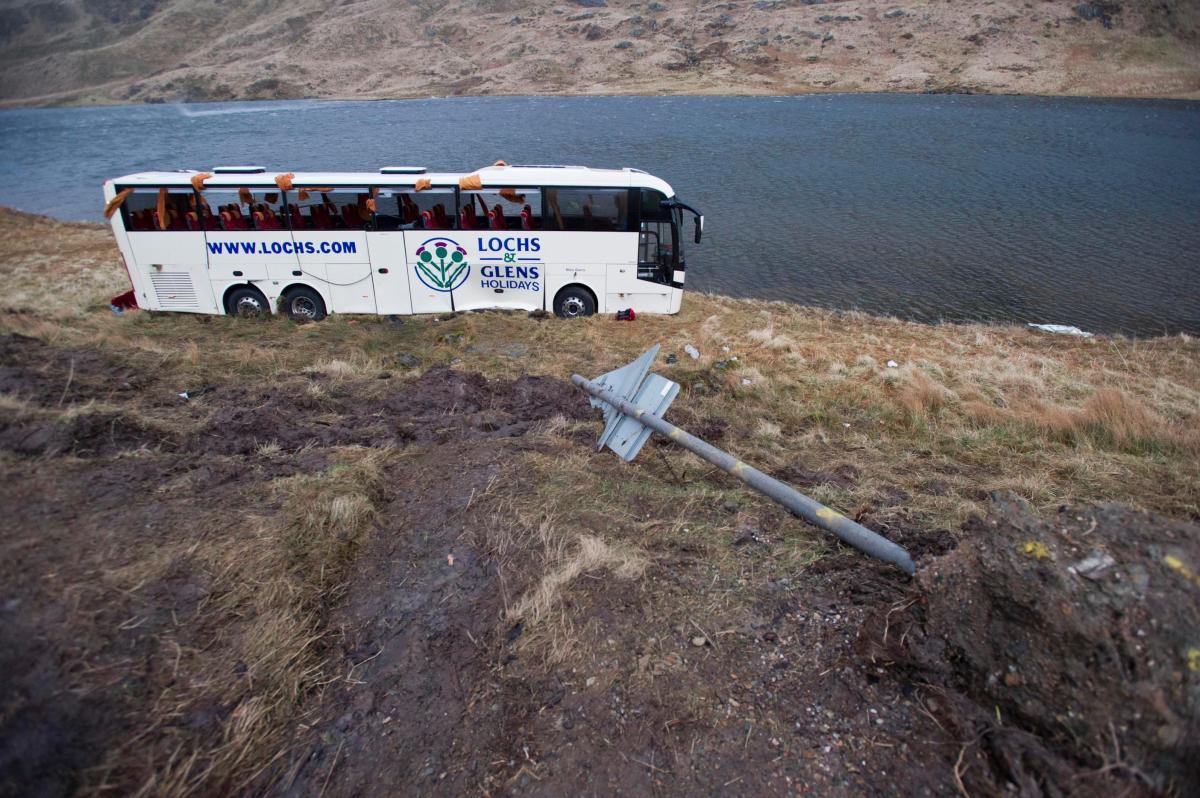
 

The shifting winds of burdens – a note for practitioners and HGV/PSV operators – Woodhouse v Lochs and Glens (Transport) Ltd.

Woodhouse v Lochs and Glens (Transport) Ltd. [2019] CSOH 105

This recent case from the Outer House in Scotland warrants a quick summary for both lawyers and operators/drivers.

It goes without saying that Scottish law is not easily translatable to that of this jurisdiction, but the reasoning of Lord Glennie may be of some persuasion in borderline cases.

Facts.

The pursuer (plaintiff) was a passenger on the bus of the defender (defendant) which came off an A-road in the Scotland highlands, rolling once and coming to rest quite a distance from the road with 51 passengers. The driver claimed that high winds pushed the bus over the verge.

Issues at trial.

The case is largely a non-descript trial of an RTA-related PI; but an argument raised by the plaintiff is noteworthy on account of its scarcity in the law reports.

It had been argued that a reverse burden ought to apply – suspending the normal common law rule of ‘he who asserts must prove’.


Plaintiff’s submissions

Mr Milligan QC suggested that the fact a well-maintained and properly driven bus came off the road gives rise to a prima facie inference of negligence. The suggestion of adverse weather conditions does not avail the defendant of a rebuttal of this – drivers are under a duty to drive accordingly to the weather conditions. 


          Defendant’s submissions

 Mr Primrose QC retorted that the reverse burden and res ipsa loquitur only applied where ‘all the factors contributing to the accident were within the control of the defenders’ and ‘in circumstances where the pursuer did not know and could not know the cause of the accident’.

Decision.

At [29], Lord Glennie cited part of his decision in Morton v West Lothian Council (2006):

“The justification for such a shift is obvious; not only are all the circumstances under the control of the defenders but the defender will have the means of knowing what occurred. The shift is necessary to avoid the denial of justice to those whose rights depend on facts incapable of proof by them… the onus shifts to the defender to prove, at the least, the existence of other facts or circumstances which might have caused the accident without his negligence”


In relation to the facts of the instant case, at [30], Lord Glennie decided that

“everything relevant to the accident involves matters within their knowledge and control… It is theoretically possible for the pursuer to find out what the defenders have done and not done in relevant respects, but in reality the rules of pleading and recovery of documents mean that there are likely to be gaps in what the pursuer can explore with a view to pinpointing where the fault lies.”

As such, he held that Lochs and Glens (Transport) Ltd were indeed on the wrong side of res ipsa. In any event, however, they easily discharged this evidential burden.

I proffer two points to this. First, this again marks a further liberalisation of the rules of res ipsa in comparison with the other two jurisdictions, but as mentioned at the beginning, such arguments may arise in a persuasive manner given Lochs and Glens (Transport) Ltd is now one of the most authoritative cases on the matter in Scots law.

Secondly, it appears that Lord Glennie’s decision in Lochs and Glens but also from Morton are driven by concerns of equality of arms in litigation – or to put it in less guarded terms, it would perhaps be the best explanation for it. If we examine the reasoning at [30], it is difficult to see quite how everything relevant to the accident is within the knowledge of the defender. The obvious retort to this point is the adequacy of litigation pleadings and discovery; however, the ‘gaps’ in such procedures allegedly create a potential injustice to pursuers.

That being said, provided the burden can be discharged by simply offering an explanation for the accident which does not include negligence of the defendant, then perhaps the shift is negligible to the point of becoming illusory.


A word of warning to operators and drivers.

Given the potential for substantial damages, this case was vigorously pursued and defended with an impressive amount of detail and the engagement of experts not usually to be seen in RTA PI actions. The following topics were investigated:

  1. Condition of the coach
  2. Weight distribution of the coach
  3. Stop at the lay by (use of tachograph downloads)
  4. Speed
  5. Reaction time

There is no need for me to explain each of the above. But as always, these reported cases send warning shots across the bows of operators – documentation needs to be completed to virtual perfection. For drivers, momentary absent mindedness may be overlooked 95% of the time, but when a gust of wind comes along and you are on the line for causing injury, loss and damage to 51 people, small infringements are magnified.

There is also a word of warning for operators on encouraging or even permitting drivers of high-sided vehicles to continue in adverse weather conditions. My next blog may shed some light on that topic!

Article 12 of Regulation (EC) 561/2006.

This allows drivers to ‘go over’ their hours as a result of an unexpected delay; but only to the extent necessary to find suitable parking. It will exempt the driver from an infringement.


What is an infringement?

All drivers who have to deal with tachographs are aware of the various rules relating to 45-minute breaks, 11-hour daily rests etc. Any violation of these, no matter how small (even by one minute) is enough to be considered an infringement.


What does Article 12 say?

Article 12 states:

“Provided that road safety is not thereby jeopardised and to enable the vehicle to reach a suitable stopping place, the driver may depart from Articles 6 to 9 to the extent necessary to ensure the safety of persons, of the vehicle or its load. The driver shall indicate the reason for such departure manually on the record sheet of the recording equipment or on a printout from the recording equipment or in the duty roster, at the latest on arrival at the suitable stopping place.”

This means that, provided you do not create a bigger danger on the road, you are permitted to drive over your time to enable you to get to suitable parking in order to protect the safety of the driver, the vehicle or its load. The driver must also record the reasons for this on the analogue chart or on the back of a printout.


What kind of situations does it cover?

The best way to think of an Article 12 exemption is when something is unexpected such as a traffic accident between junctions of a motorway and you having to wait 30 minutes to get moving which has pushed you over your daily spread.

However, the rule is worded is a broad manner to cover any unexpected event which makes it impossible for the driver to remain compliant with drivers’ hours.


How does this work?

If (or when!) you are stopped by the DVA/DVSA and your cards are checked, you will normally receive a fine if you have an infringement. However, if you show the examiner the printout from the day of the infringement, you will not receive a fine.

This is normally how it operates, but there can be particular issues.


  1. If you knew the run could not be done within your hours.

Article 15 of the 2006 Regulation states that employers must organise the work of their driver so as to comply with drivers’ hours. This means that, when you leave the yard with a load and are aware that there is a risk that the run may not be completed within your available spread etc., you will not be able to rely on an exemption under Article 12.

This applies regardless of what type of goods you are carrying. Many drivers think that carrying perishable / fresh allows them to drive over their hours. This is not the case; although it has been argued that the wording in Article 12 which allows drivers to go over their hours to ensure the safety of their load, could cover such a situation. The Court of Justice of the EU has settled this matter and made clear that infringements can only be exempted if the delay was unexpected – if you knew you would not have enough time to finish the run, you cannot use Article 12 to avoid an infringement.[1]


  1. Provided that road safety is not jeopardised.

Using Article 12 to move the lorry when your hours are up does not mean you can do so no matter what. The safety of yourself, your lorry and your load must be balanced against consideration for road safety in general. If, for example, you are too tired to move the lorry safely, then you will not be covered by Article 12.


  1. Suitable stopping place.

This particular point has not been substantively addressed by the courts and therefore, a large amount of the interpretation will be done by individual traffic examiners.

Much of it will come down to common sense. If you decide to drive three hours over your spread, simply to get to a chippy that you like, while you pass two motorway service stations, then it is possible that you will be denied the use of Article 12. However, if you are in a spare unit with no food, then passing a number of empty lay-bys in order to get to a service station an hour away may be more acceptable. You, as the driver, must make an assessment on what would be reasonable, in your professional opinion, to do.

There will also be scope for choosing a stopping place based on the type of load you are carrying. If you have an abnormal load, then you will be permitted to travel to the nearest wide-load bay at services etc. The same flexibility should apply to livestock and high-value cargo where a normal A-road lay-by or industrial estate is simply not suitable.

Also bear in mind that road safety cannot be jeopardised regardless of what circumstances you find yourself in.


  1. Recording.

As soon as you park at the nearest suitable stopping place, you must take a driver print-out for that day (or write on the back of the analogue chart), the reasons for driving over your hours. It is also best practice to mention that you only drove over your hours to the extent necessary find the nearest suitable parking and then sign it along with the date and time.

If you do not record the reason for driving over your hours, you cannot avail of Article 12, even if you were fully entitled to drive over your hours.[2] It appears that most of the issues which arise under Article 12 are due to this point. Lorry drivers are inconvenienced every day by traffic accidents, unexpected delays at deliveries etc. all of which are covered by this exemption, but the drivers are ultimately fined because of a lack of recording or inadequate recording of reasons. Documenting these events is absolutely vital – and the more information you provide, the better your chances. Best practice would be to write a few sentences on a notebook and staple this to the chart / print-out. The tachograph regime is a very formal and strict system, so likewise, any exemptions to the regime must be similarly formal and strict.

Remember to inform your employer of this at the time.


  1. After 28 days.

It is quite easy to lose the Article 12 print-out after 28 days since it essentially does not matter to you any longer, but do ensure that you give your employer your print-out with the reasons or remind them of the analogue chart which bears the reasons on the back when you hand these in after 28 days.


[1] Case C-235/94; (R v Bird [1996] RTR 49).

[2] Harding v Vehicle and Operator Services Agency [2010] EWHC 713 (Admin).