JTI Polska Sp Zoo & Ors. -v- Jakubowski & Ors [2023] UKSC 19
This is a recent case of the Supreme Court in interpreting article 23.4 of the CMR 1956 which relates to charges to be paid by a carrier in respect of a total or partial loss of a load.
In short, the Supreme Court held that previous jurisprudence which interpreted “…and other charges incurred…” is still to be given a broad interpretation which includes, in this case, excise duties owed on cigarettes.
The CMR
This is not the first case note on JTI Polska with many interested law firms having published comment in the days after handing down. My addition, however, focuses on the road transport aspect in particular. Many lorry drivers and operators will be familiar with CMRs and the attention customs (sometimes as distinct from customers) pay to these documents.
Although the document is often referred to as ‘the CMR’, the paperwork itself is properly called the consignment note. The CMR is the convention which regulates the contents and effect of a consignment note. The Convention on the Contract for the International Carriage of Goods by Road is a UN convention and has 58 signatories which include each of the EU member states and the UK.
Its purpose is to standardise the contracts for carriage of goods across borders and to define the carrier’s or sub-contractor’s liability when operating cross-border where many other legal requirements change. It applies to every contract for the commercial carriage of goods by road when the destination for the goods is in a different country.
The provisions of the convention regularise the liabilities between the sender and carrier such as article 7 which tells us that the sender is responsible for loss suffered by the carrier for an incorrectly particularised consignment note (description and weight of goods etc.), or article 17(4) which relieves the carrier of liability when the damage of the load arises from, for example, the use of an unsheeted trailer when the use of such had been expressly agreed in the consignment note.
It does not apply to goods between the four jurisdictions of the UK and the Republic of Ireland.
The limitation period under the CMR is rather shorter at one year.
JTI Polska facts
JTI, the appellant, is a carrier based in Poland. The respondents, Jakubowski and others are part of Japan Tobacco International (a group of companies who buy and sell tobacco products).
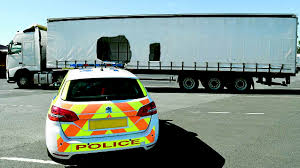
In March 2019, JTI collected a load of cigarettes from Gostkow, Poland to bring to Crewe in the UK. Upon reaching the UK, the driver parked at Clacket Lane services on the M25. In a lamentably familiar scenario, the curtain of the vehicle was cut and 289 cases of cigarettes were stolen while the driver slept. The value of the goods stolen (not including tax) was £72,512. The tax owed was £449,557. HMRC demanded payment of this excise duty and it was paid by the 2nd respondent shortly after. This amount was then sought from JTI under the terms of the CMR, article 23.4 in particular.
The legal argument
JTI argued that article 23.4 ought to be interpreted in the narrow sense which would exclude the carrier’s liability for excise duty for goods stolen from its vehicle.
The respondents argued that a decision from the House of Lords from 1978, Buchanan, which also interpreted article 23.4, should be followed. In Buchanan, whisky bound for Iran (in the days when such trips took place by road), was stolen from the vehicle near London. It was held by the House of Lords on a 3/2 split that the words ‘in respect of’ in article 23.4 were wide enough to include the way in which goods were carried, miscarried or lost and that the excise duty was accordingly recoverable from the carrier. Lord Wilberforce, who gave the leading judgment, said “the carriers’ duty was to carry the whiskey to the port of embarkation – their failure to do so might, or might not, bring a charge into existence. But if it did, I think it right to say that the charge was in respect of the carriage.”
From this, the facts of JTI are essentially on all fours with the binding decision of Buchanan. However, the Supreme Court was invited to overturn Buchanan for the following reasons:
- academic criticism of Buchanan;
- obiter comments from other cases such as from the Court of Appeal;
- uncertainty in the law;
- the use of a narrow approach in a similar regime for railway carriage (CIM); and
- a narrow interpretation being used in other countries such as Germany and the Netherlands.
The appellants, in seeking to overturn a decision from the House of Lords had to persuade the Supreme Court, in line with the Practice Statement of 1966, that Buchanan was untenable or manifestly wrong and that the Supreme Court must take the opportunity to correct this.
Decision
The Supreme court in a unanimous seven-justice panel put pay to any uncertainty in the law (compared with 3/2 in Buchanan) by affirming Buchanan and the broad approach.
In essence, the conduct of the carriage will determine liability of excise duty under article 23.4.
Among many of the reasons given by Lord Hamblen (with whom the other six justices agree), two, in my opinion are particularly important:
- in a situation where one of the parties is liable for the payment of excise duty (such as in the case of theft from the vehicle), it is not clear why it ought to be the entirely innocent sender of the goods who has no control of the vehicle; and
- if there is some confusion from Buchanan due to academic criticism, obiter criticism from the Court of Appeal and a narrow approach used in some other countries, then the overturning of Buchanan is not going to resolve that alleged lack of clarity.
Note to hauliers
As I invariably attempt to do in these posts, how this relates to individual hauliers is important. Beyond glib suggestions such as a preference for theft from a carrier’s vehicle to occur in Germany, there is not much from this decision which ought to change the approach of carriers or lorry drivers save for a reemphasis of anti-theft procedures.
The decision has confirmed, beyond doubt, that the carrier will be liable for excise duty if goods are stolen from their vehicle. There is no question that the sender will be solely liable for these charges.

 Transport Law NI